Household waste management goes hand in hand with Waste-to-Energy
Source: Antaranews.com | September 19, 2026
Waste management at the household or community level needs to go hand-in-hand with large-scale solutions—such as Waste-to-Energy (WtE) programs—to handle waste that remains unmanaged.
A resident-led waste management initiative in RT 08/RW 04, Malaka Jaya Urban Village, Duren Sawit, East Jakarta, demonstrates that sorting waste at the source can yield both environmental and economic benefits.
Taufiq Supriadi Yusuf, the Head of RT 08/RW 04, stated in an official release in Jakarta on Saturday that household waste sorting must serve as the foundation of waste management, while Waste-to-Energy projects can offer an alternative for handling waste not addressed by resident initiatives.
“Residents must sort their waste from the start. Organic waste is essentially like a gold mine that can be utilized, while non-organic waste can be used for Waste-to-Energy,” said Taufiq.
Through a combination of biopore infiltration holes, composters, maggot farming, and waste banks, 41 households in the RT 08/RW 04 neighborhood are striving to manage their waste independently.
Taufiq acknowledges that resident-led waste management has limitations, particularly regarding land availability and processing capacity.
Consequently, he believes that Waste-to-Energy projects remain necessary as part of the solution for waste management in Indonesia.
“Waste-to-Energy initiatives must still be pursued, as those projects have the land that we lack. If the land were available, we would certainly welcome Waste-to-Energy facilities,” Taufiq said.
Taufiq believes that waste management solutions need to be implemented in layers, ranging from household-level sorting to large-scale processing technologies.
He hopes that Waste-to-Energy projects can help reduce the ever-growing volume of waste, including at final disposal sites.
However, he emphasizes that the availability of waste processing technology should not cause the community to stop sorting waste at the source. “Looking ahead, the ‘family’ must move together so that the state no longer stands alone,” said Taufiq.
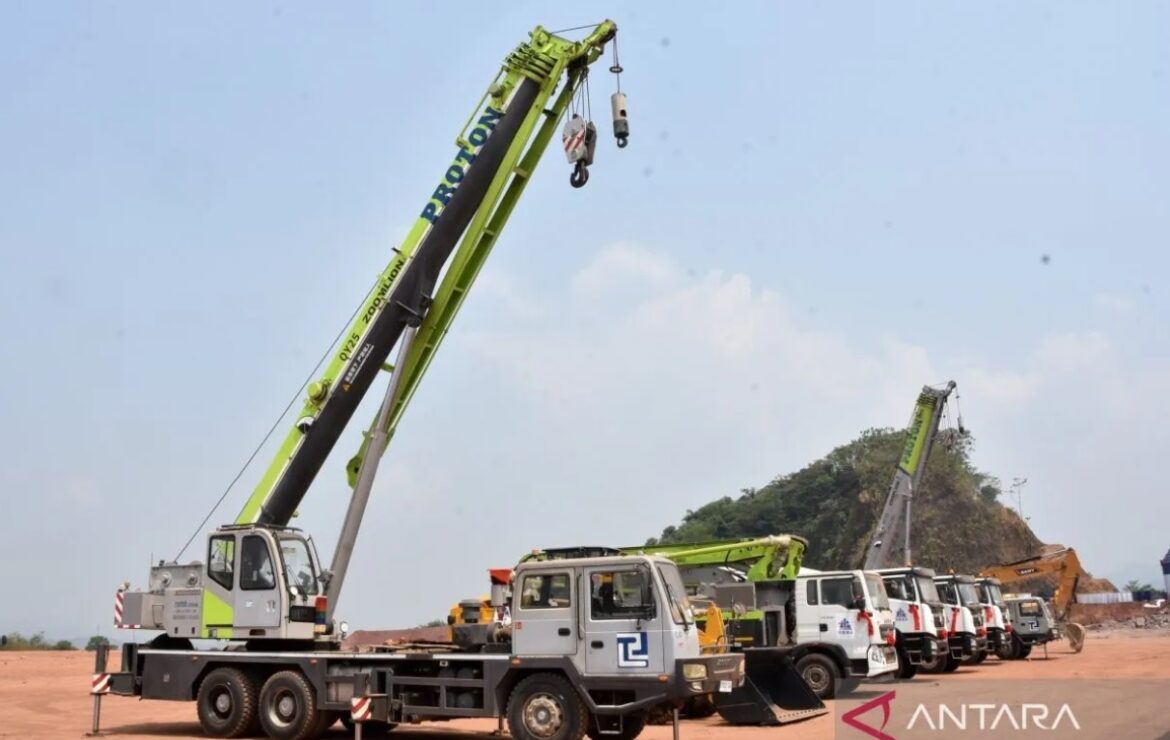
On Thursday (September 17), Danantara Indonesia—through PT Danantara Investment Management (DIM) and PT Daya Energi Bersih Nusantara (Denera)—officially inaugurated the construction of the Bogor Raya 1 Waste-to-Energy (PSEL) facility in Galuga Village, Cibungbulang, Bogor Regency.
PSEL Bogor Raya 1 is the third facility to enter the construction phase—following PSEL Denpasar Raya and PSEL Kota Bekasi—and will serve the agglomeration area comprising Bogor Regency and Bogor City.
Danantara Chief Investment Officer (CIO) Pandu Sjahrir stated that the facility is part of Danantara’s efforts to accelerate the development of sustainable, eco-friendly, technology-based urban waste management solutions, in accordance with Presidential Regulation Number 109 of 2025.
Pandu noted that the waste issue affects not only our lives today but also the future of our children.
“PSEL Bogor Raya 1 is designed to deliver tangible impacts on waste management, green energy development, and local economic empowerment. The project aims to process over 500,000 tons of waste annually, cut landfill emissions by up to 80 percent, and reduce carbon emissions by approximately 640,000 tons of CO2 equivalent per year,” said Pandu.
RELATED NEWS


ABOUT US