





Adoption of Electric Trucks: Indonesia Advised to Use Battery-Swapping Technology
Source: Bloombergtechnoz.com | October 13, 2026
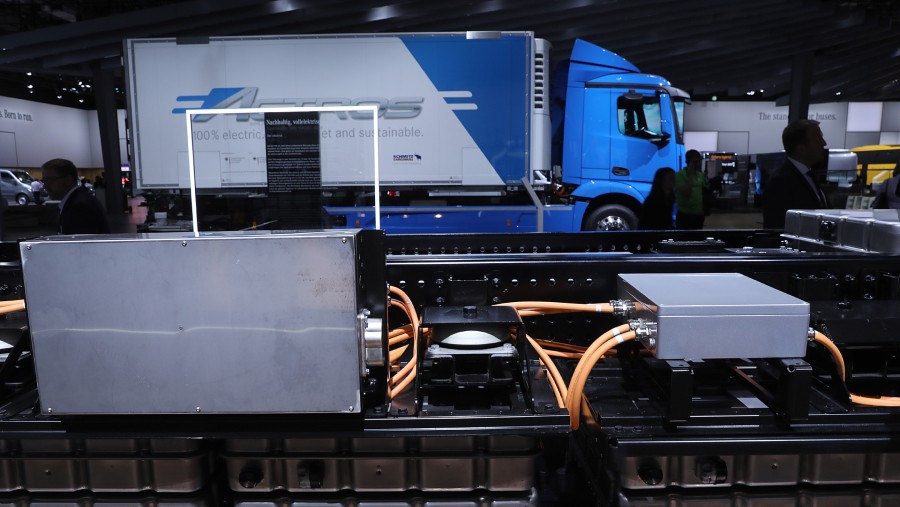
The Institute for Essential Services Reform (IESR) considers battery swapping technology to be the most effective solution for supporting the domestic operation of electric trucks.
IESR Chief Executive Officer (CEO) Fabby Tumiwa stated that this technology is far more efficient than conventional charging, which is time-consuming—particularly for large-capacity batteries reaching up to 900 kilowatt-hours (kWh).
With an automated, robotic swapping system, the battery replacement process takes only about 10 minutes.
“We can emulate the technology used in China—specifically battery swapping—because it is fast. Consider the comparison: charging a 900 kWh battery takes a long time, whereas swapping can be completed automatically in just 10 minutes,” Fabby said when contacted by Bloomberg Technoz on Tuesday (October 13, 2026).
Fabby added that, according to International Energy Agency (IEA) reports, standard fast charging for heavy commercial vehicle batteries with capacities ranging from 300 kWh to 900 kWh typically still requires downtime of between 1 and 3 hours per session.
In China, as of the end of 2026, the number of battery-swapping stations for heavy-duty trucks has surpassed 3,000 units, supporting the operations of over 100,000 electric trucks.
“In addition to cutting down charging wait times, this exchange-based ‘battery-as-a-service’ (BaaS) scheme has proven capable of reducing the initial investment cost of purchasing electric trucks by 40% to 50%, as consumers do not need to purchase the battery outright at the start,” he explained.
Energy Efficiency
Meanwhile, Fabby noted that his organization’s study indicates electric trucks can generally reduce energy costs by 62% to 87% compared to conventional trucks.
If the transition to electric heavy-duty transport vehicles is carried out gradually through 2060, final energy demand in the logistics transport sector could potentially be reduced by 67% to 68%.
To support this policy, Fabby argues that the government does not need to provide electricity tariff subsidies for the operation of commercial electric trucks.
Transport and logistics businesses already stand to benefit from significant reductions in energy costs.
Government support would be better directed toward initial-stage fiscal incentives aimed at lowering operational investment costs—specifically the total cost of ownership (TCO) and upfront purchase prices.
“For electric trucks, the focus shouldn’t be on subsidizing energy prices. For instance, if we cannot manufacture them domestically yet, we have to import them. Taxes on these imports should be reduced to lower the TCO or the initial cost,” he explained.
Additionally, further fiscal incentives should be allocated to conventional trucking companies that commit to converting their fleets or independently producing electric truck fleets.
The adoption of electric trucks is projected to be most promising within the mining sector and export-oriented industries. This trend is driven by global market demands for reduced carbon emission intensity throughout the supply chain.
RELATED NEWS


ABOUT US