Steel Industry Faces Import Pressure Amid Supply Opportunities for Oil & Gas Downstream Projects
Source: Kontan.co.id | July 7, 2026
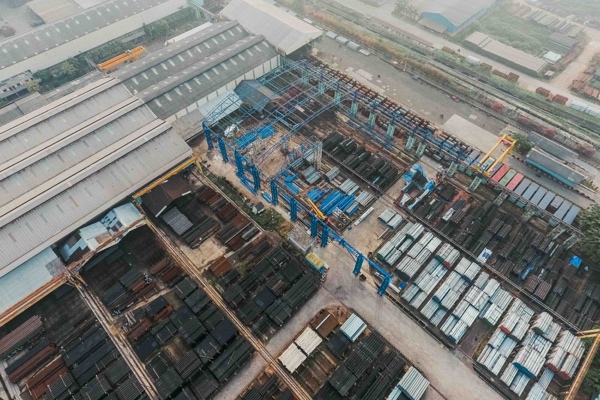
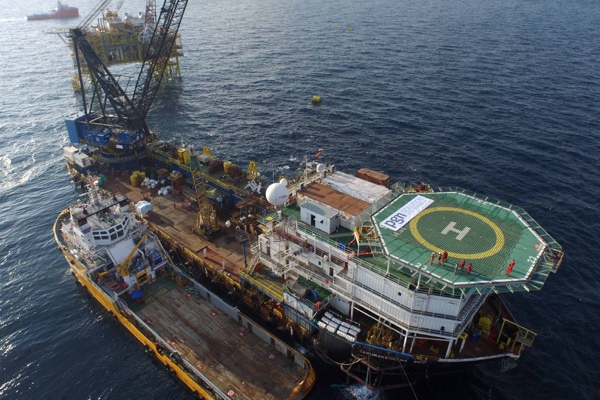
Downstreaming programs in the oil and gas (migas) and mining sectors present significant opportunities for the national steel industry. However, the influx of low-priced imported products remains a major challenge hindering domestic producers from maximizing supply for these various strategic projects.
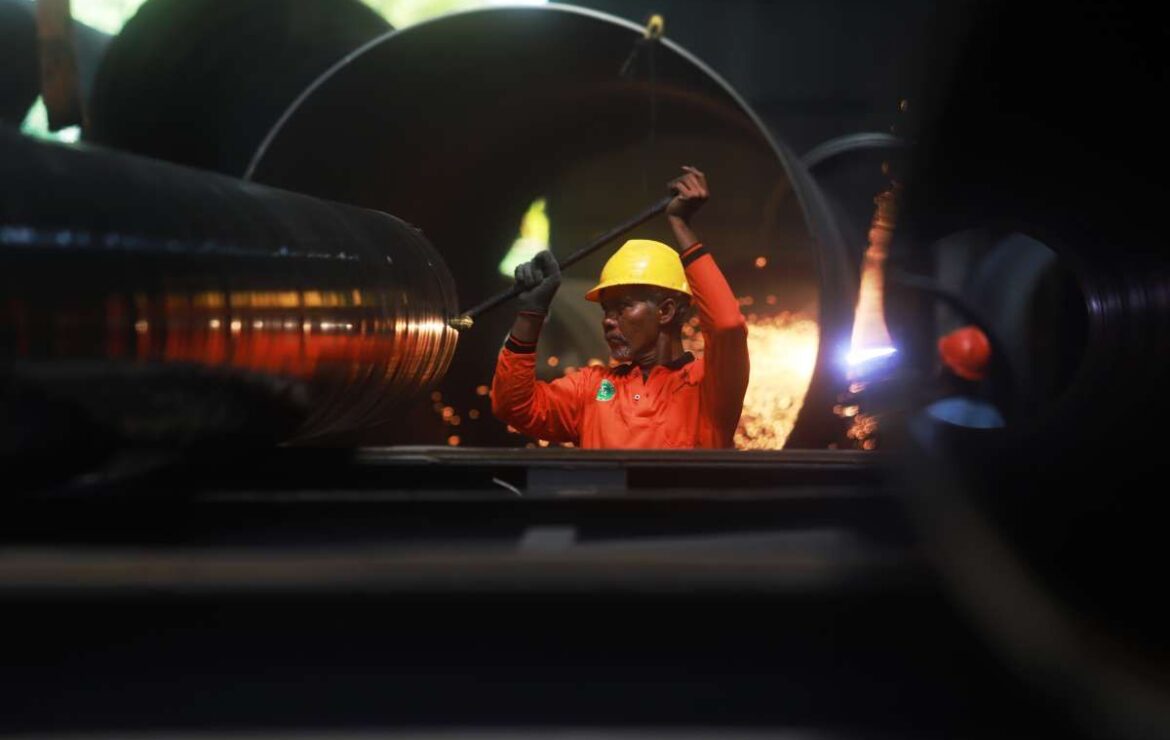
Harry Warganegara, Executive Director of the Indonesian Iron and Steel Industry Association (IISIA), stated that in terms of production capacity, the national steel industry actually possesses sufficient capability to meet the majority of infrastructure development needs for oil, gas, and mining downstreaming.
According to him, domestic producers are capable of supplying a wide range of steel products—from plates, steel pipes, construction steel, and sheet steel to various fabricated products—tailored to specific project specifications.
“The national steel industry currently possesses substantial and growing production capacity to support various national strategic projects, including infrastructure development for downstreaming in the oil, gas, and mining sectors,” Harry told Kontan on Thursday (July 2, 2026).
Nevertheless, he noted that the national steel industry’s utilization rate remains suboptimal. The primary cause is the intense pressure from imported products, which erodes the market share of domestic producers.
The Impact of the Steel Import Flood
Harry explained that existing production capacity has room to meet the rising demand for steel through 2030. However, this opportunity can only be seized if the business climate is supportive and the domestic market is not continuously flooded with unfairly priced imports.
“The main challenge today lies not merely in production capacity, but in optimizing the industry and fostering a healthy, competitive business climate,” he said.
According to Harry, the flood of imported steel—including products entering through unfair trade practices—keeps national industry utilization low. Consequently, new investments and capacity expansions struggle to develop optimally.
In addition to import pressures, the steel industry faces challenges regarding production costs. High energy prices, logistics costs, and financing expenses continue to weigh on the competitiveness of national steel products compared to imports. On the other hand, Indonesia also remains dependent on imports for a number of strategic raw materials, such as specific grades of iron ore, scrap, ferroalloys, and various other supporting materials.
Harry believes this challenge requires a more integrated policy approach. He suggests that the government needs to align policies across the trade, industry, investment, and goods and services procurement sectors to prioritize the use of domestic steel products, particularly in strategic projects.
Amidst these challenges, Harry emphasizes that the national steel industry is actually capable of meeting most of the requirements for oil and gas downstreaming projects. Domestically produced items meeting the necessary standards include billets, slabs, hot-rolled coils (HRC), cold-rolled coils (CRC), rebar, wire rods, structural steel profiles, plates, and steel pipes.
However, there remain certain specialized steel products that cannot yet be produced economically in Indonesia. These include ultra-high-specification steel for high-tech applications, specific corrosion-resistant and extreme-temperature-resistant steels, seamless pipes of specific diameters and grades, specialty stainless steel, electrical steel, and various alloy steels.
“These products are generally still imported due to limited domestic demand scale, high technology investment costs, or the lack of economic viability for local production,” he stated.
Downstreaming as a Momentum-Builder
To strengthen the national steel industry’s role in downstreaming projects, IISIA continues to facilitate collaboration between steel producers and end-users—such as Pertamina, PGN, mining companies, EPC contractors, and various government ministries and agencies.
Through discussion forums, business matching events, and standards development, the association strives to bridge the gap between user requirements and the capabilities of national producers. IISIA also identifies product specifications needed by the industry, serving as a reference for its members to develop production capacity and invest in value-added steel products. Harry hopes that the acceleration of strategic infrastructure development will serve as a catalyst to strengthen the national steel industry. He believes the government needs to tighten oversight on non-compliant steel imports, ensure competitive energy pricing, and encourage investment in value-added steel products.
“Stronger synergy among the government, state-owned enterprises, industry players, and end-users is essential to ensure that downstreaming projects not only boost investment in the downstream sector but also strengthen the national steel industry ecosystem,” he said.
RELATED NEWS


ABOUT US