Gap between EVs and Charging Stations is Starting to Widen
Source: Kompas.com | September 8, 2026
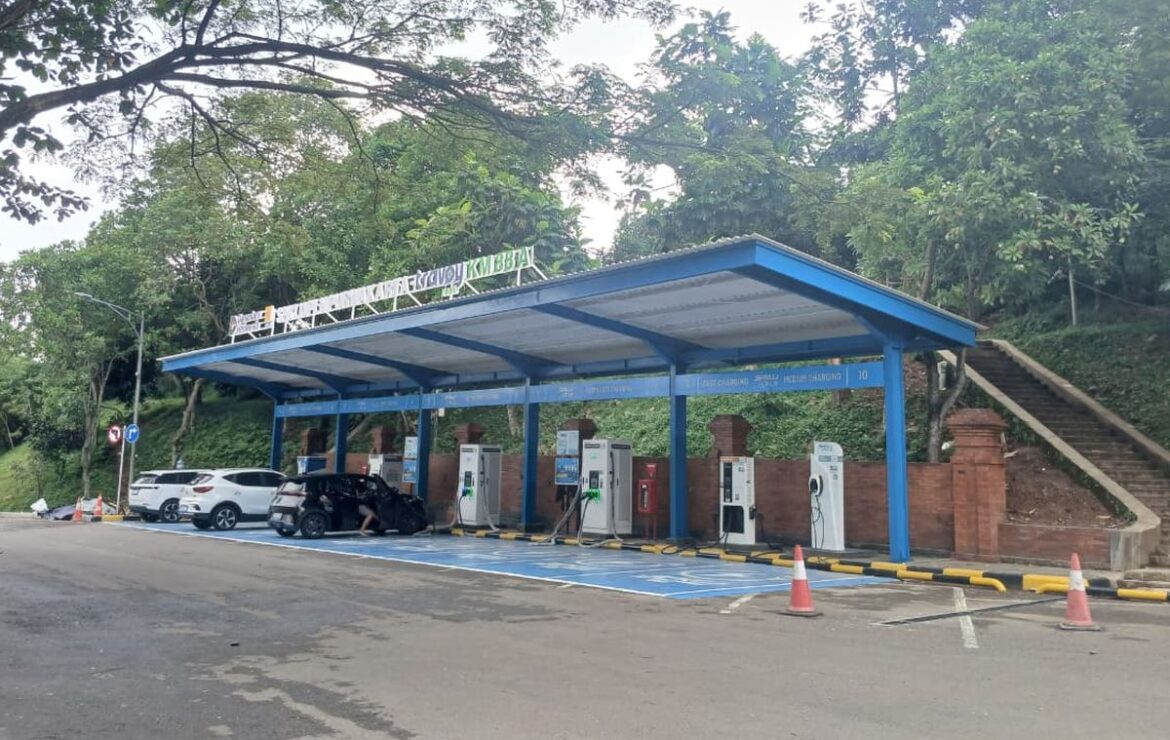
The growth of electric vehicles in Indonesia continues to be accompanied by a need for charging infrastructure. However, the number of vehicles on the road and the availability of charging stations remain areas of concern.
According to data processed by the Ministry of Industry (Kemenperin), the total electric vehicle population in Indonesia reached 468,231 units as of April 2026. Electric cars accounted for 223,100 of these units.
Meanwhile, data monitored via the PLN Mobile app indicates that there are currently 5,030 charging stations distributed across Indonesia.
Slowly but surely, the ratio between the growth rate of electric cars and the number of charging stations in Indonesia is widening, moving away from ideal conditions.
Using the electric passenger car population and the number of charging stations as a rough estimate, there are approximately 44 electric cars for every single charging station.
This figure indicates that the growth of the electric car population needs to be balanced with an expansion of charging infrastructure, as the availability of chargers is a crucial factor in supporting the daily use of electric vehicles.
It should be noted that the figure of 44 electric cars per charging station is a rough comparison based on the stated electric car population and number of chargers.
This ratio does not directly reflect the official ratio of electric vehicles (KBLBB) to public charging stations (SPKLU), as definitions of vehicle types and infrastructure units may differ. Furthermore, the count of 5,030 charging stations includes only those owned by PLN and excludes stations built by private entities.
Ratio of Public EV Charging Stations to Electric Vehicle Population
Nevertheless, automotive analyst Yannes Martinus Pasaribu noted that official guidelines regarding the ratio of public EV charging stations (SPKLU) to the electric vehicle population are already quite clear.
“In the Decree of the Minister of Energy and Mineral Resources (ESDM) Number 24.K/TL.01/MEM.L/2025 concerning the 2025–2030 Development Plan for Public EV Charging Stations for Battery-Based Electric Motor Vehicles (KBLBB), the government utilizes a ratio of approximately 17 KBLBBs per charging station for the 2025–2027 period,” Yannes said when contacted by Kompas.com recently.
“Subsequently, this ratio is tightened to approximately 15 KBLBBs per charging station for the 2028–2030 period, in line with the growth of the EV population,” Yannes added.
Based on the plan, the demand for charging infrastructure will continue to rise as the number of electric vehicles on the road increases.
“Based on these calculations, the requirement for charging stations is projected to rise from approximately 5,810 units in 2025 to 9,633 units in 2026, and continue growing to around 62,918 units by 2030 to serve a projected 943,764 KBLBBs,” he stated.
More Than Just Adding Chargers
Yannes believes that the challenge of developing charging stations goes beyond the mere number of available units. The distribution of locations and the reliability of the facilities are also crucial factors in ensuring the infrastructure is truly usable for electric vehicle owners.
“Thus, the challenge is not simply about chasing a specific number of chargers, but ensuring that their growth keeps pace with the EV population, that they are distributed according to travel patterns, maintain high uptime, and are located where users actually need them,” he said.
Consequently, the expansion of charging stations must be carried out sustainably while taking into account user needs across various regions. Adequate availability of charging stations is expected to support travel convenience and encourage the adoption of electric vehicles in Indonesia.
RELATED NEWS


ABOUT US