EV TKDN to Rise to 80% by 2030: How Much Value-Added for Indonesia?
Source: Kontan.co.id | September 9, 2026
The government has mandated a phased increase in the Domestic Component Level (TKDN) for electric vehicles (EVs) as part of the national EV industry development roadmap. The EV TKDN target is set to reach 40% in 2026, rising to 60% between 2027 and 2029, and finally to 80% by 2030.
This upward revision of targets is seen as having the potential to generate significant added value for the national automotive industry. However, the actual benefits will depend on the extent to which the higher TKDN requirements drive the deepening of the industrial structure, rather than merely boosting domestic vehicle assembly activities.
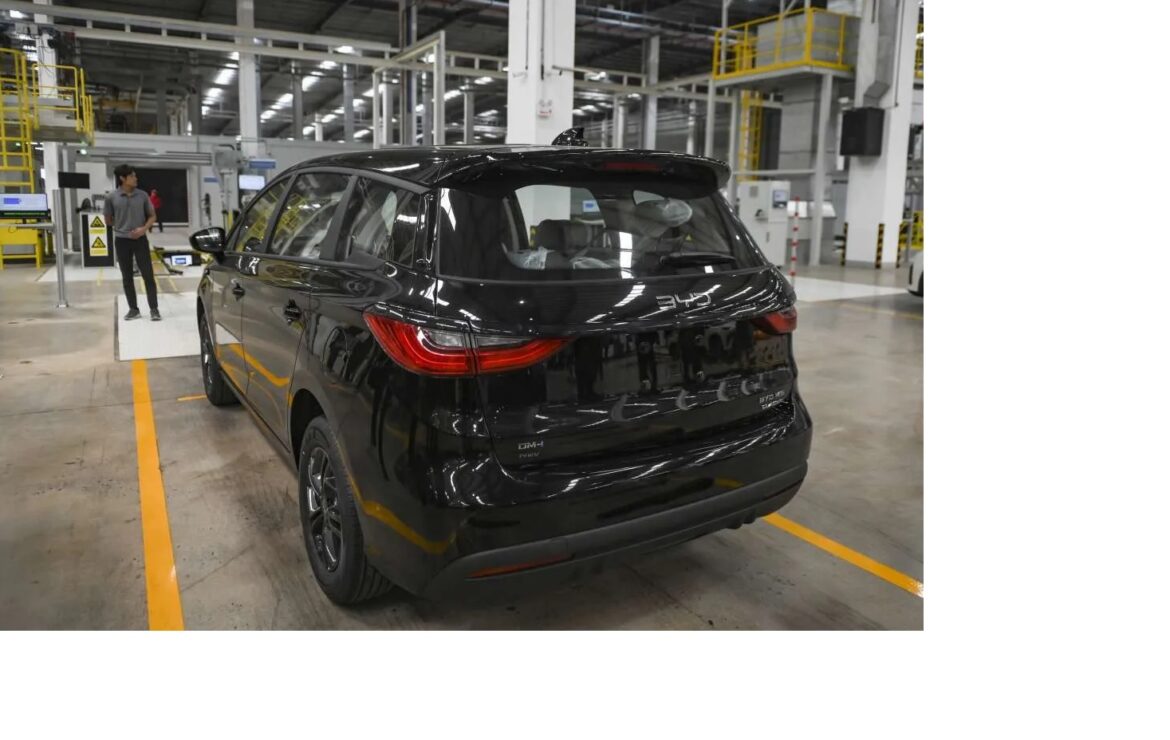
Yannes Martinus Pasaribu, an automotive expert from the Bandung Institute of Technology (ITB), stated that the potential for EV industry development in Indonesia remains immense. However, the future expansion patterns of EV manufacturers are expected to shift from importing Completely Built-Up (CBU) vehicles toward assembly, local production, and the establishment of domestic supply chains.
“The next phase will be defined more by competition through investment and localization than by simple importation,” Yannes told Kontan on Wednesday (September 9, 2026).
According to Yannes, China’s massive EV production capacity, combined with trade barriers in several Western markets, makes the ASEAN region an attractive expansion destination for Chinese manufacturers.
Indonesia holds a strategic advantage due to its large domestic market and its established base for minerals and battery manufacturing. Furthermore, TKDN regulations and mandates requiring local production following CBU import phases are compelling manufacturers to increase the localization of their production in Indonesia.
The impact of this expansion is already evident in the sales growth of battery electric vehicles (BEVs) over the past few years. Looking ahead, EV market growth will be increasingly driven by the availability of vehicle models that meet consumer needs—such as family MPVs and SUVs—at competitive price points.
Additionally, factors such as local production, affordable financing, the availability of public EV charging stations (SPKLU), and the quality of after-sales service will play crucial roles in shaping the market. Yannes believes that increasing the Domestic Component Level (TKDN) could yield greater benefits if accompanied by the development of a domestic supply chain. This is because localization that stops at the assembly stage risks limiting the value added captured by Indonesia.
“If localization is limited to assembly while high-value components, engineering, and technology continue to originate from abroad, there is no significant increase in value added to foster domestic industrial self-reliance,” he said.
According to him, the influx of EV investment offers Indonesia opportunities to boost production capacity, create jobs, and establish new supply chains. However, the government must ensure that increasing the Domestic Component Level (TKDN) also fosters domestic industrial capabilities to manufacture high-value components.
The transfer of engineering and technological capabilities, alongside local human resource development, must also be integral to the strategy for increasing domestic content.
“Incentives need to be increasingly linked to long-term investment, the use of domestic suppliers, the transfer of engineering capabilities, the production of high-value components, and local human resource development,” said Yannes.
On the market front, increased localization and competition among EV manufacturers could make the electric vehicle market more competitive. Yannes noted that competitive pressure would be felt most acutely in the entry-level to mid-range segments.
However, he predicts that EV prices in Indonesia will not drop as drastically as they did during the price wars in China. This is because vehicle prices in Indonesia are still influenced by exchange rates, logistics costs, taxes, local investment, and factory utilization rates.
Competition is more likely to shift toward a “value war” within the IDR 150 million to IDR 300 million price range. In this bracket, entry-level EVs will go head-to-head with gasoline-powered Low-Cost Green Cars (LCGCs), hatchbacks, and low-end Multi-Purpose Vehicles (MPVs).
Manufacturers do not necessarily have to slash prices to win the competitive battle. Strategies can instead focus on enhancing battery capacity, features, warranties, financing schemes, and charging infrastructure.
Yannes added that EV competition would also put pressure on brands that have traditionally dominated the entry-level gasoline and hybrid vehicle segments.
These manufacturers need to accelerate their EV development while simultaneously leveraging their existing strengths in sales networks and after-sales service. “Competition from Chinese EVs will not only expand Indonesia’s EV market but also deepen the national automotive industry,” he concluded.
RELATED NEWS


ABOUT US