Govt Urged to Prioritize Electric Bus Incentives; Here’s Why
Source: Kompas.com | September 14, 2026
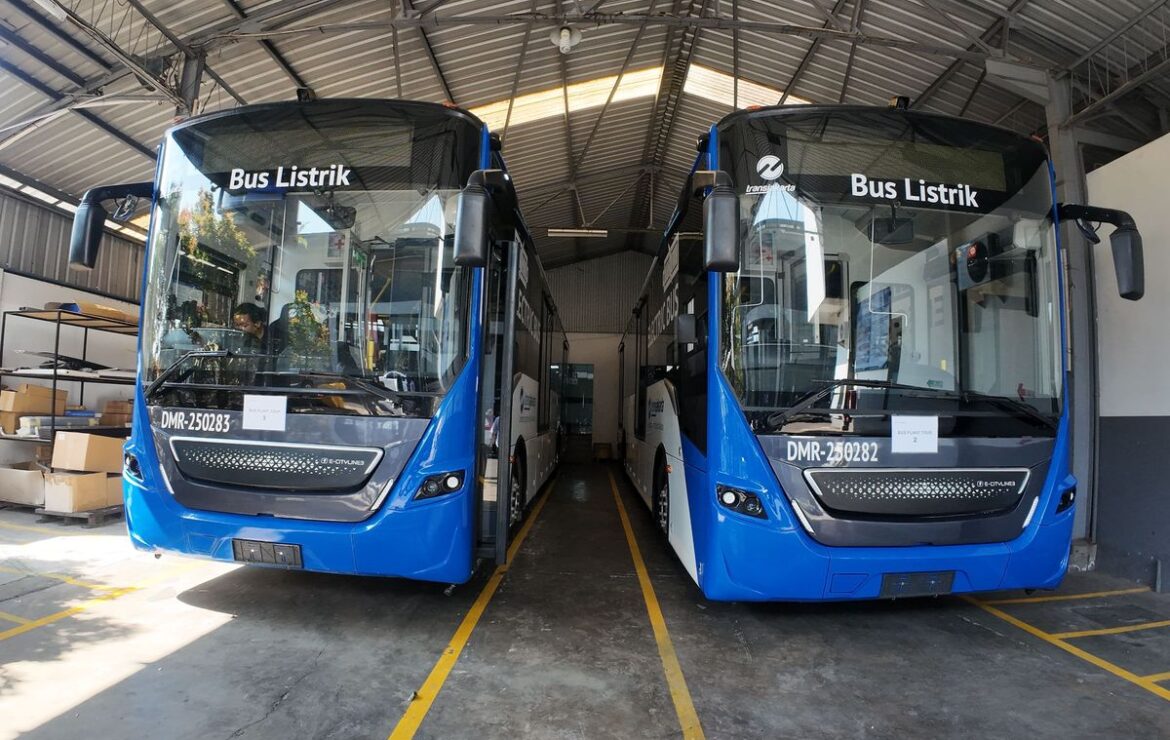
The government is considered to need a re-evaluation of the direction of electric vehicle incentives, particularly to increase support for public transportation. Such a policy is deemed capable of delivering a broader impact compared to subsidies for private electric vehicles.
Djoko Setijowarno, an academic from the Civil Engineering Department at Soegijapranata Catholic University (Unika) and an Advisory Board member of the Indonesian Transportation Society (MTI), stated that current energy transition policies in the transportation sector still face issues regarding skewed priorities.
According to him, incentives for private vehicles have not addressed the root cause of urban mobility problems: the lack of safe, comfortable, and affordable public transportation.
The Bogor Regency Government plans to expand its electric bus route network to reach Depok and the Puncak area.
“This is despite the government having provided incentives in the form of a VAT reduction from 11 percent to 1 percent for electric buses with a minimum Domestic Component Level (TKDN) of 40 percent,” Djoko told Kompas.com (September 13, 2026).
“The relatively high purchase price remains a major obstacle for a number of local governments in adopting this eco-friendly public transport,” he said.
Meanwhile, the government has reportedly allocated a budget of up to IDR 3 trillion for a subsidy of IDR 3 million per unit to support the target of one million electric motorcycles.
Djoko believes that this budget would yield a greater impact if a portion of it were diverted to developing public transportation systems in various regions.
Traffic on the Jakarta Inner City Toll Road appeared heavy during the evening rush hour on the third day of the second phase of Large-Scale Social Restrictions (PSBB), Wednesday (September 16, 2020). Motor vehicle restrictions via the odd-even license plate scheme on various roads in the capital were officially lifted during the second phase of PSBB.
Systemic Impact
According to Djoko, providing incentives for electric buses has a systemic impact because a single vehicle can serve thousands of passengers daily.
Consequently, state subsidies benefit not only operators but also the public across various income groups. Electric buses also have the potential to reduce traffic congestion. A single high-capacity bus is said to be capable of replacing approximately 40 to 60 motorcycles on the road.
Beyond reducing the number of vehicles, a shift by the public from motorcycles to public transport can also impact traffic safety. Djoko notes that motorcycles account for approximately 75 percent of accidents in Indonesia.
“State or regional budget subsidies for electric buses can benefit thousands of people per unit every day,” said Djoko.
From an environmental perspective, the use of electric buses is considered more efficient because a single vehicle serves many passengers. Reducing private vehicles on the road can simultaneously help curb emissions and urban air pollution.
The urgency of government support is further highlighted by the limited reach of public transport operating under the “Buy The Service” (BTS) scheme.
Currently, only about 8.3 percent—or 46 out of 552—local governments have developed public transport systems using this scheme. Its coverage extends to just 13 of the 38 provinces, encompassing 19 of the 98 cities and 16 of the 416 regencies.
The “Teman Bus” program, managed by the Ministry of Transportation via the BTS scheme, previously received state budget support. However, the budget has steadily declined after peaking in 2023.
The BTS budget stood at IDR 51.83 billion in 2020, then rose to IDR 312.25 billion in 2021. It reached IDR 552.91 billion in 2022 and IDR 582.98 billion in 2023.
Subsequently, the budget dropped to IDR 437.89 billion in 2024, IDR 177.49 billion in 2025, and a mere IDR 82.67 billion in 2026.
Djoko believes that the experience of various countries demonstrates that transport electrification is more effective when public transport is prioritized.
Therefore, the government needs to redirect a portion of electric vehicle incentives to strengthen electric bus fleets, charging infrastructure, and the operational sustainability of public transport in the regions.
This move is not just about vehicle electrification; it also addresses traffic congestion, safety, air quality, and equitable access to mobility for the public.
RELATED NEWS


ABOUT US