Incentives Removed, Will the Exponential Rate of EV Sales Halt?
Source: Bisnis.com | February 19, 2026
The government, through the Ministry of Industry, has confirmed the termination of completely built-up (CBU) import incentives for pure electric cars starting at the end of 2025.
Based on Investment Ministerial Regulation No. 6/2023 in conjunction with No. 1/2024, the incentive program and import deadline will end on December 31, 2025, while starting January 1, 2026, manufacturers are required to meet the 1:1 local production commitment according to the Domestic Component Level (TKDN) roadmap.
Amidst this policy, automotive industry players are still hoping for further stimulus in 2026, considering that car sales are expected to be under pressure until the end of 2025.
Fransiscus Soerjopranoto, Chief Operating Officer of PT Hyundai Motors Indonesia, projects that the market share of pure electric cars (battery electric vehicles/BEVs) could reach 13% by 2025, even surpassing that of hybrid cars (HEVs). However, he cautioned that this growth will depend on government incentive support.
Gaikindo data shows that wholesale BEV sales reached 103,931 units last year, a 140.64% year-on-year increase. Meanwhile, hybrid car sales reached 65,943 units. This impressive performance came amidst various 2025 stimulus measures, such as Government-Borne VAT (DTP), PPnBM DTP, and exemption from import duties on Completely Built Vehicles (CBU).
“In other words, the incentives provided in 2025 will have a direct impact on the growth of the EV market itself. This is why many manufacturers are importing vehicles to Indonesia,” said Frans.
Industry Urges Further Stimulus
Amidst policy uncertainty, industry players believe incentives are still crucial. Gaikindo Chairman Putu Juli Ardika stated that people’s purchasing power has not fully recovered.
“Indeed, in the current situation, purchasing power is not yet very good. If incentives are provided, at least like during the COVID-19 pandemic, car prices will be more affordable, which could boost vehicle volume,” he said at ICE BSD, Tangerang.
Gaikindo targets domestic sales to approach 800,000 units by the end of 2025, up from around 600,000 units in the first 10 months.
“If sales volume increases, others will follow. We must protect job opportunities, maintain our exports, and ensure the sustainability of this automotive ecosystem,” added Putu.
Similarly, the Deputy President Director of PT Toyota Motor Manufacturing Indonesia, Bob Azam, emphasized the importance of maintaining Indonesia’s position as the largest market in ASEAN.
“We hope to reach a total market share of 800,000, so we can still surpass Malaysia. Because reputation is important,” he said.
Manufacturing Strategy for 2026
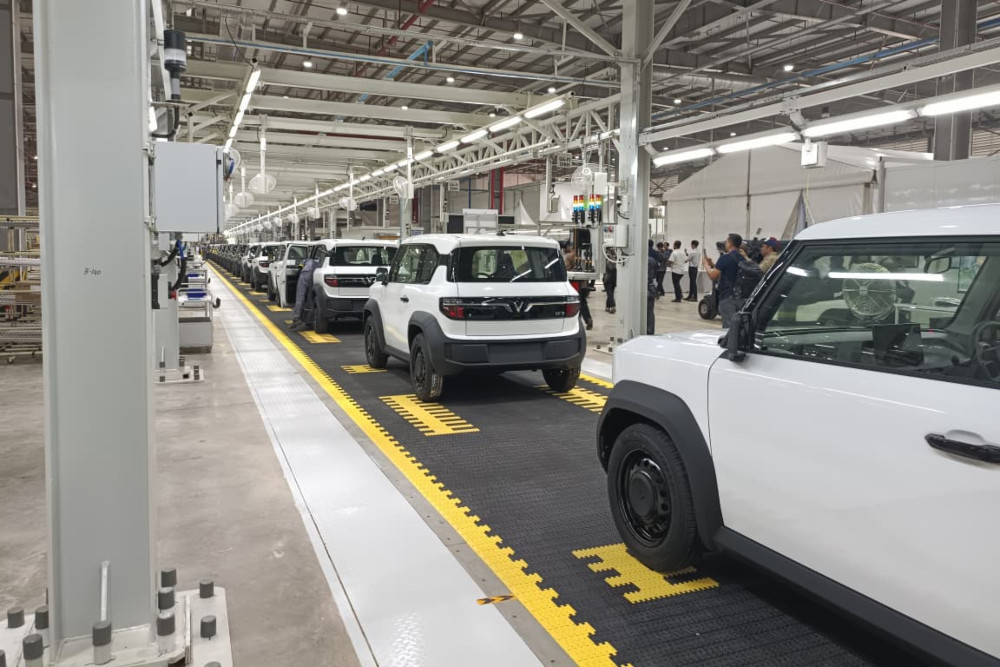
Several manufacturers have prepared anticipatory measures by strengthening local production. VinFast confirmed that the construction of the factory in Subang is a form of fulfilling its incentive commitment.
VinFast Indonesia CEO, Kariyanto Hardjosoemarto, stated that the decision to build the factory was based on government regulations to obtain incentives. He also hopes that fiscal policies such as the PPnBM DTP will be maintained.
“Incentives related to PPnBM DTP will likely have a greater impact,” he said.
BYD Indonesia, which is currently building a factory in Subang worth IDR 11.2 trillion, also hopes the incentives will be extended.
Byd Indonesia’s Head of Marketing, PR & Government, Luther T. Panjaitan, admitted that his company lacks confidence in maintaining sales without consistency or an extension of the same policy.
“BYD’s sales performance has grown significantly thanks to the government’s CBU incentives,” Luther said some time ago. With the national EV market share having reached around 15% as of November 2025, the government’s decision in 2026 will determine whether the exponential growth rate of electric vehicles can continue or slow down.
RELATED NEWS


ABOUT US