

Property Sector Weakens, Middle Class Purchasing Power Falls
Source: Bisnis.com | February 18, 2026
Indonesia’s property sector continues to show slowing performance, with residential prices recorded a steady decline since 2024.
The Bank for International Settlements recorded residential property prices in Indonesia plummeting from 1.46% in the third quarter of 2024 to 0.8% in the third quarter of 2025. This is despite the fact that, according to the Indonesian Society of Appraisers (Mappi), property growth in the country once reached 6–7%.
Mappi administrator Harizul Akbar Nazwar believes there has been a shift in trends in the property market. Now, instead of relying on expectations, the property market is driven by reality and need.
“So, as a primary need, it’s certainly sought after. But the market has apparently shifted. From being community-driven to infrastructure-driven,” Harizul explained in a recent Factory Hub Bisnis podcast.
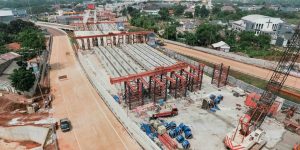
Currently, people are choosing to buy property based on distance, adequate infrastructure, and easy transportation access, rather than expensive properties as investment assets.
Harizul stated that the property sector is one of the most important sectors for Indonesia, given its contribution to gross domestic product (GDP) of 14–15%. Therefore, he believes, property must be viewed as a policy tool, not merely an economic sector.
It’s no surprise, then, that the government is flooding the property sector with various incentives. These enticing policies include the People’s Business Credit (KUR Perumahan) program with a 5% government interest subsidy, as well as the extension of the 100% government-borne value-added tax (PPN DTP) incentive until 2027, which applies to homes priced up to IDR 5 billion.
“Although our interest rate trend has also been relatively downward, currently at 4.75 basis points and has decreased by almost 1% compared to last year, it still feels insufficient,” Harizul said.
These policy efforts have not yet yielded results. The sluggish property sector is also caused by structural issues, such as weakening purchasing power and economic uncertainty.
“But there’s one rather interesting paradigm. There’s also a trend among young people today who are avoiding home ownership,” Harizul added.
Indonesia itself is still facing a shortage, or backlog, of up to 15 million units of home ownership. In response, the government is offering a solution through the 3 million homes program.
However, developers are again concerned that people will not be interested in purchasing properties that have already been built. Harizul is urging the government to address not only the supply side but also the demand side.
MIDDLE CLASS
On the other hand, the middle class is increasingly squeezed because they don’t have as solid a foundation as the upper class, but also don’t receive as much government assistance as the low-income group (MBR). Yet, this segment is targeted as a potential consumer.
According to Harizul, people, especially the younger generation, consider long-term risks, such as income and ability to repay loans. “These things make people, especially first-home buyers, relatively less confident in deciding whether to buy now or not.”
To ensure the success of the 3 million homes program, Harizul is urging the government to issue measured policies with optimal public outreach. Meanwhile, from the developer perspective, he suggests preparing non-cash incentives for the public. Such as discounts or conversion into household appliances for the lower middle class.
RELATED NEWS


ABOUT US